Quick answer: A fire limitation blanket is a large, high-temperature textile system placed over a vehicle or other defined object to limit the spread of flames, radiant heat, smoke and burning debris. In electric vehicle incidents, it is used as a vehicle fire containment blanket, not as an active extinguishing agent. The battery may continue to generate heat and gases beneath the blanket, so product selection, trained deployment, monitoring and the wider emergency response plan remain essential.
The terms EV fire blanket, electric vehicle fire blanket, fire containment blanket and fire suppression blanket are often used for similar products. Searches for car fire blanket vs EV fire blanket usually compare naming rather than a fixed construction: a car blanket may be offered for conventional, hybrid or electric vehicles, while an EV blanket should be evaluated specifically for lithium-ion battery fire containment. They do not always describe the same verified performance. Buyers should compare the intended application, finished size, material construction, model-specific test data, handling system and post-use procedure rather than relying on the product name alone.
BSTFLEX supplies fire containment blankets and lithium battery fire-risk products for vehicle, industrial mobility and battery applications. This guide explains the terminology and the information an engineering, safety or procurement team should place in an RFQ.
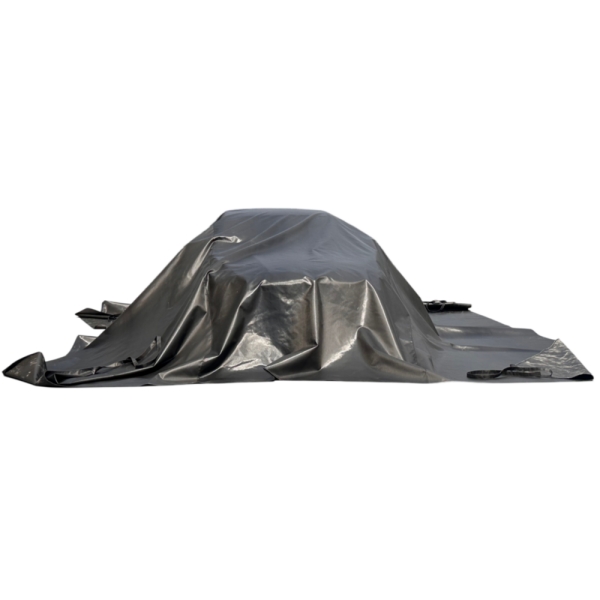
A fire limitation blanket is the term used in the DIN framework for blankets intended to restrict the development and spread of a fire involving an electric vehicle. The functional objective is limitation: keeping flames, heat and debris within a more controlled area while responders carry out the approved incident plan.
A fire containment blanket is the most useful general commercial description. It communicates that the blanket forms a temporary high-temperature barrier around the affected vehicle or equipment. An electric vehicle fire containment blanket may reduce direct flame exposure to adjacent vehicles, charging equipment, building surfaces or stored goods, but it does not remove the energy inside a damaged lithium-ion battery.
Fire suppression blanket is a common search phrase, including EV fire suppression blanket, car fire suppression blanket and lithium battery fire suppression blanket. The wording can be misleading when it suggests guaranteed extinguishment. Covering a conventional fuel fire may reduce oxygen and visible flames. A battery undergoing thermal runaway can continue producing heat, flammable gases and internal reactions without external oxygen. For lithium-ion incidents, limitation and containment are the more accurate performance descriptions.
An EV fire blanket is intended to cover the complete vehicle and create a controlled containment zone. Depending on the tested construction and incident conditions, it may help with the following functions:
These functions explain why buyers search for an EV fire containment blanket, electric car fire blanket, vehicle fire limitation blanket, high voltage vehicle fire blanket or EV battery fire blanket. The correct product specification still depends on the vehicle class, expected thermal load, response procedure and verified test scope.
A buyer specification should state the limitations as clearly as the intended benefits.
This distinction is particularly important when comparing an EV fire blanket vs fire extinguisher, an EV fire blanket vs water mist system or an EV fire blanket vs immersion container. These are different tools with different operating roles. A blanket is normally one part of a broader fire-risk and recovery plan.
At the time this guide was prepared, DIN SPEC 91489:2024-11 was listed as the current technical rule for fire limitation blankets used with electric vehicles. DIN 91489-1:2026-11 was listed for November 2026 publication as the follow-on standard. Procurement teams should verify the latest edition before issuing a specification or accepting a test report.
Search results and supplier documents may use labels such as DIN SPEC 91489 fire blanket, DIN SPEC 91489 EV fire blanket, DIN SPEC 91489 fire limitation blanket, DIN SPEC 91489 fire containment blanket or DIN 91489-1 fire containment blanket. These phrases should be treated as claims requiring model-specific evidence. A fire limitation blanket standard defines requirements and test methods; it does not make every blanket using similar fabric compliant.
The DIN scope creates two practical purchasing rules:
The comparison EV fire blanket vs lithium battery fire blanket therefore depends on the object being covered. A vehicle blanket is sized and handled for complete vehicle containment. A battery blanket may be designed for a pack, module, test fixture or another defined battery assembly and should not inherit vehicle-standard claims without specific evidence.
A useful EV fire blanket test report should identify the tested model, dimensions, mass, material composition, construction details, test method, observations, acceptance criteria and any limitations. The report should be traceable to the product supplied rather than presented as a generic fabric certificate.
A car fire blanket or vehicle fire blanket is commonly considered for parking garages, underground car parks, EV charging stations, road tunnels, ferries, workshops, vehicle storage areas and fleet depots. In these locations, the main concern is often preventing one incident from exposing nearby vehicles, charging infrastructure or the building structure.
Searches such as EV fire blanket for parking garage, electric vehicle fire blanket for EV charging station, vehicle fire containment blanket for road tunnel and car fire blanket for RoRo deck represent different environments. The same finished blanket should not be assumed suitable for all of them. Access space, floor condition, ventilation, drainage, sprinkler interaction, storage position and responder training must be reviewed.
A forklift fire blanket is selected for a smaller but often more congested operating environment. Warehouses may contain racking, packaging, machinery, charging equipment and other vehicles close to the incident. The specification may need to cover an electric forklift, pallet truck, reach truck, stacker, order picker, AGV or other industrial vehicle.
Important long-tail requirements include electric forklift fire blanket for warehouse, forklift fire containment blanket for charging area, pallet truck fire blanket for logistics center and AGV fire blanket for automated warehouse. The buyer should provide the maximum parked dimensions, mast or guard height, aisle width and the intended deployment direction.
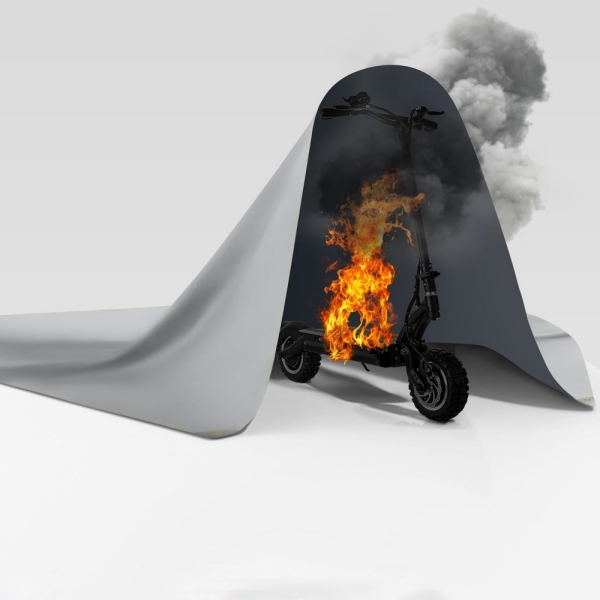
An e-bike fire blanket or e-scooter fire blanket addresses a different scale of equipment and a different storage pattern. Relevant sites include apartment buildings, delivery depots, rental fleets, charging rooms, workshops and public transport facilities.
For day-to-day battery storage or charging, a blanket may not be the only product required. A lithium battery safety bag surrounds an individual battery or pack, while a fire blanket is normally positioned as an external incident-containment tool. The two products should not be described as interchangeable.
A size label alone does not confirm adequate coverage. A fire limitation blanket size chart should be interpreted against the largest object in the intended fleet and the method used to pull the blanket into position.
For an EV fire blanket size or vehicle fire blanket dimensions request, provide:
Common market sizes can be useful reference points, but the final choice should be confirmed by a physical fit trial. A blanket that barely reaches the floor may allow flame and heat to escape at the perimeter. A blanket that is unnecessarily oversized can become slower and more difficult to deploy.
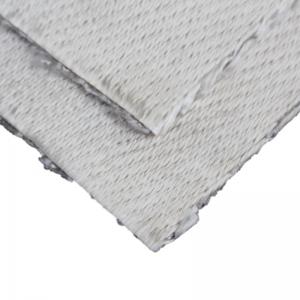
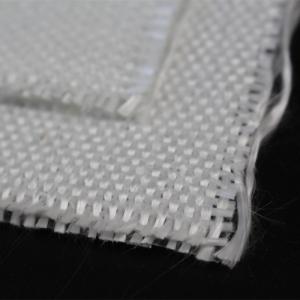
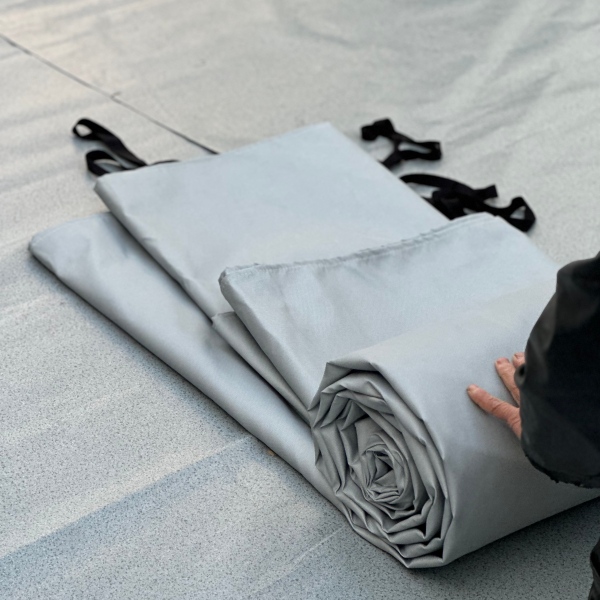
Terms such as high silica fire blanket, silicone coated fiberglass fire blanket, vermiculite coated silica fire blanket and multilayer fire blanket describe material families, not complete product performance. The finished assembly includes fabric, coating, seams, edge reinforcement, handles, eyelets, markings and storage configuration.
The RFQ should request the following data:
| Specification item | What the supplier should state | Why it matters |
|---|---|---|
| Base fabric and coating | Fiber type, coating type, layer count and nominal construction | Defines the supplied material system and supports traceability |
| Temperature data | Continuous exposure, short-duration peak exposure and test basis | Prevents an unqualified peak value from being presented as continuous performance |
| Finished dimensions and tolerances | Length, width, area and dimensional tolerance | Confirms coverage and repeatability |
| Finished blanket weight | Total mass including handles and reinforcements | Affects manual handling, storage and deployment |
| Seams and edges | Thread, seam layout, edge reinforcement and corner construction | Weak joining details can control the performance of the complete blanket |
| Handles, loops and eyelets | Quantity, location, length, reinforcement and strength evidence | Supports safe pulling and repeatable deployment |
| Electrical properties | Test method and measured result where required | Relevant around high-voltage electric vehicles and industrial equipment |
| Gas and water behavior | Whether the construction is permeable or coated, and how it fits the response plan | Affects venting, ballooning, cooling and smoke movement |
| Storage system | Bag, cabinet, trolley, folding pattern and storage dimensions | Determines accessibility and deployment readiness |
| Inspection and reuse | Pre-use checks, post-use criteria, replacement and disposal instructions | Prevents an exposed or damaged blanket from returning to service without assessment |
An EV fire blanket temperature rating should never be reduced to one headline number. A supplier may quote a continuous operating temperature, a short-duration peak temperature, a fabric-only result or a finished-assembly test. Those values are not interchangeable.
Ask four questions:
This is more useful than comparing the largest temperature number on two datasheets. A credible fire containment blanket material specification identifies both the condition and the evidence behind the value.
A technically capable blanket can still fail operationally if it is inaccessible, incorrectly folded or too heavy for the assigned responders. The procurement review should therefore include the complete handling system.
The blanket should be deployed only by instructed personnel under the applicable emergency procedure. Personnel should not enter an unsafe atmosphere or remove a blanket from an active incident without authorization from the responsible emergency service.
The answer depends on the blanket design, exposure and manufacturer instructions. “Reusable” should not be interpreted as unlimited reuse after fire contact.
An EV fire blanket inspection checklist should look for coating loss, holes, cuts, brittle areas, contaminated surfaces, damaged seams, distorted eyelets, weakened handles and unreadable labels. A blanket used only in a clean training exercise may remain serviceable after inspection and correct refolding. A blanket exposed to direct flame, chemicals, battery residue or severe mechanical loading may require quarantine, specialist assessment or disposal.
The RFQ should ask for written fire blanket reuse criteria, replacement criteria, cleaning restrictions, decontamination guidance and disposal instructions. These requirements are more useful than a broad claim that the product is reusable.
Use the following information when requesting a quotation from an EV fire blanket manufacturer or fire containment blanket supplier:
Anhui Parker New Material Co., Ltd. manufactures BSTFLEX high-temperature textile products and supports custom dimensions, reinforced structures, handling details, private-label packaging and project documentation. A quotation should be based on the actual application and confirmed construction, not on an unqualified request for the “highest temperature” blanket.
It is a high-temperature textile system used to limit the spread of flames, heat and debris around a defined fire source. For electric vehicles, it is intended as a containment tool rather than an active extinguishing agent.
The terms overlap. “Fire limitation blanket” is the more specific standards-oriented term for limiting fire development, while “fire containment blanket” is the broader functional and commercial term. The verified performance of the finished product matters more than the label.
It may reduce external flames by limiting oxygen, but it cannot guarantee that thermal runaway inside the battery will stop. The incident may still require cooling, monitoring, controlled recovery and professional emergency response.
An EV blanket is a large engineered assembly intended for complete vehicle coverage and severe thermal exposure. A kitchen fire blanket, welding blanket or general heat shield is not automatically suitable for vehicle fire containment.
Select the size from the largest vehicle dimensions, required floor overlap, deployment route and operator capability. Confirm the choice with a physical fit test rather than relying only on a general vehicle category.
There is no universal material answer. High-silica, coated fiberglass and other high-temperature constructions have different thermal, mechanical, electrical, permeability, weight and handling characteristics. Compare completed-blanket evidence for the intended application.
No. Its stated scope is fire limitation blankets used with electric vehicles, not direct application to a removed and opened traction battery. Battery-module or pack containment requires a separate application assessment.
Reuse depends on the product instructions and the exposure. Every blanket should be inspected after training or use. Direct fire exposure, contamination, holes, damaged seams or weakened handles may require withdrawal from service.
Request a technical datasheet, model-specific construction data, finished dimensions and mass, test reports, operating limitations, deployment instructions, inspection criteria, reuse or replacement rules, labeling details and traceability information.
Provide the object type, maximum dimensions, environment, required functions, test requirements, deployment method, storage system, quantity, labeling, packaging and any private-label needs.
For an accurate recommendation, send the equipment or vehicle dimensions, application environment, required standard or test evidence, deployment method, storage preference and expected quantity. BSTFLEX can then review whether an existing product, a custom vehicle blanket, an industrial truck blanket, a battery containment blanket or a purpose-built protective cover is the correct direction.

 English
 français
 Deutsch
 русский
 italiano
 español
 Nederlands
 العربية
 日本語
 한국의
 Türkçe
 Polski
 Tiếng Việt
 slovenský
 Indonesia