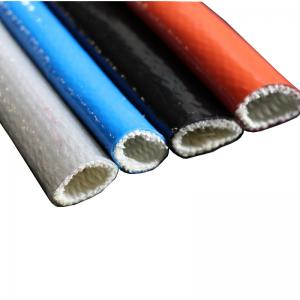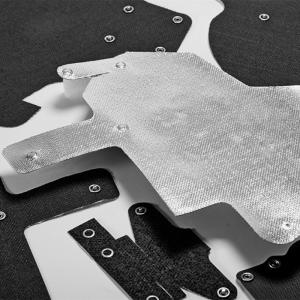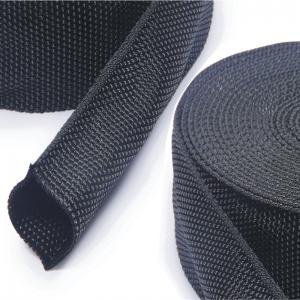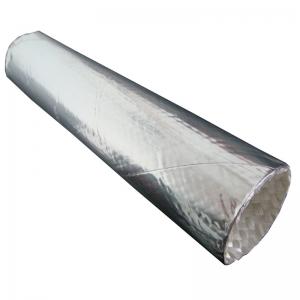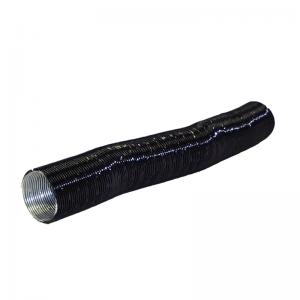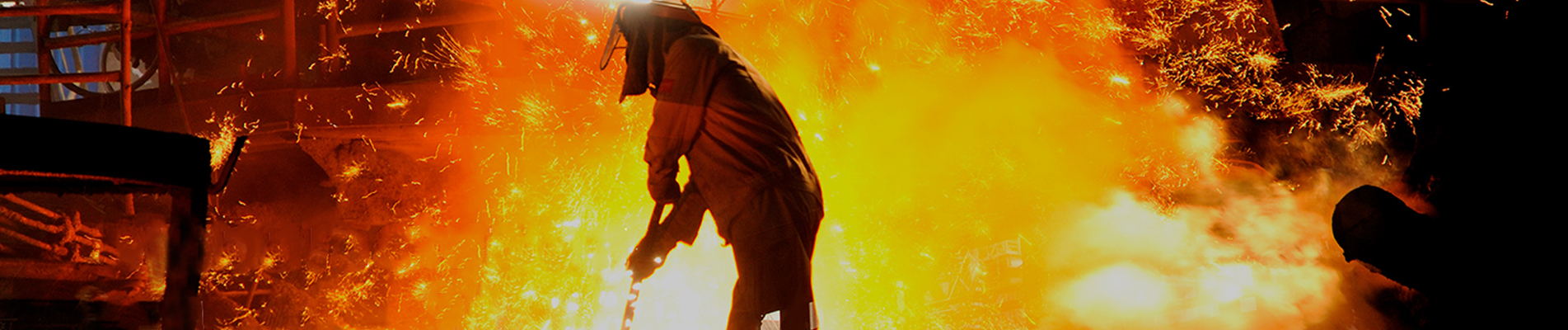
UMjunta de expansão de tecidoÉ uma conexão flexível instalada em dutos industriais para absorver o movimento entre seções de equipamentos ou da própria tubulação. Em vez de forçar a expansão térmica, a vibração ou as alterações de alinhamento em estruturas rígidas de aço, a seção flexível se deforma conforme o sistema se move.
As juntas de dilatação têxteis são comumente utilizadas em sistemas que transportam ar quente, gases de escape, gases de combustão e outros fluidos de processo gasosos. Seu elemento flexível pode ser composto por tecidos técnicos trançados, tecidos revestidos, membranas de vedação a gases, camadas de reforço e isolamento térmico selecionados de acordo com as condições operacionais específicas.
Como o elemento flexível não é metálico, esse tipo de junta também é amplamente conhecido como junta de encaixe.junta de expansão não metálicaoujunta de expansão de tecido não metálico.
Para projetos industriais personalizados, consulte oJunta de Expansão de Tecido Não Metálico BSTFLEX.
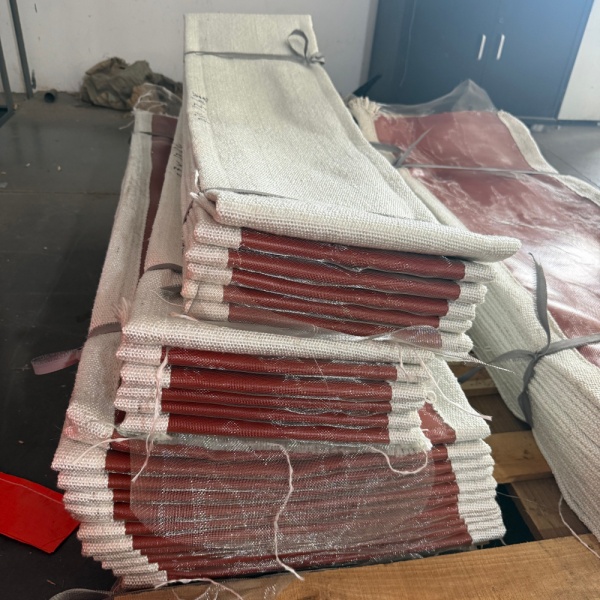
Uma junta de dilatação têxtil é uma seção flexível projetada para ser posicionada entre duas partes relativamente rígidas de um sistema de dutos. Seu objetivo é permitir o movimento controlado, mantendo a conexão necessária entre essas seções.
Os dutos industriais raramente permanecem dimensionalmente inalterados durante a operação. Quando um forno, caldeira, sistema de exaustão ou duto de processo aquece, a estrutura metálica circundante se expande. Quando esfria, ela se contrai novamente. Ventiladores e equipamentos rotativos também podem introduzir vibração, enquanto as tolerâncias de instalação podem criar pequenos desalinhamentos entre os componentes adjacentes.
Se esses movimentos forem transmitidos diretamente por meio de dutos rígidos, podem criar cargas adicionais em:
A junta têxtil cria uma zona flexível onde parte desse movimento pode ocorrer sem exigir que toda a estrutura do duto se comporte como um conjunto rígido.
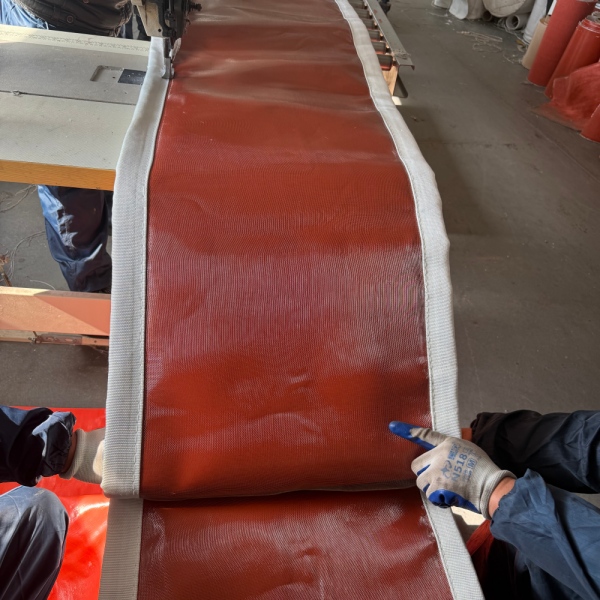
O termojunta de expansão não metálicaDescreve o elemento flexível em vez de cada componente na montagem completa.
Estruturas metálicas, barras de fixação, revestimentos ou outros componentes ainda podem ser usados ao redor da junta. No entanto, a seção que realiza o principal movimento flexível é fabricada em tecido, elastômero, têxtil revestido, membrana laminada ou uma combinação desses materiais, em vez de um fole metálico moldado.
Essa distinção é importante porque as juntas de dilatação de tecido e as de metal se comportam de maneira diferente.
Um fole metálico acomoda o movimento flexionando as ondulações metálicas moldadas. Uma junta de expansão têxtil utiliza a flexibilidade de sua cinta têxtil ou composta para mudar de forma conforme o duto se move.
Para grandes dutos industriais, especialmente aqueles que transportam gases a pressões relativamente baixas, essa construção pode proporcionar uma capacidade de movimentação considerável em um espaço de instalação compacto.
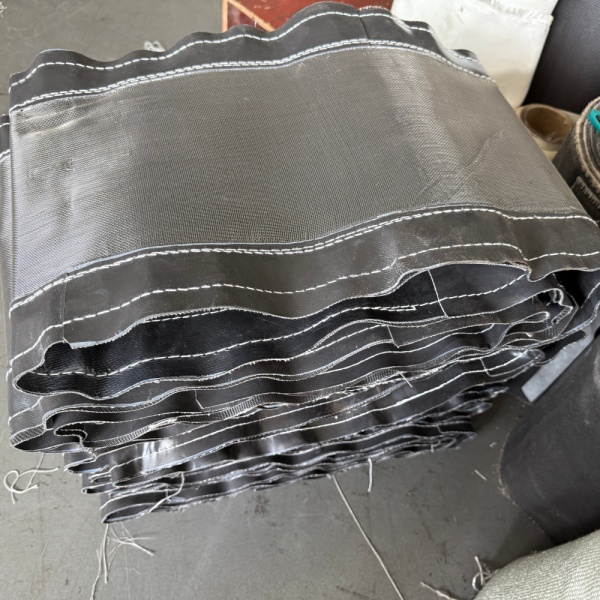
O princípio básico de funcionamento é simples.
Imagine duas seções de dutos de ar quente separadas por um espaço controlado. Um elemento de tecido flexível preenche esse espaço e é fixado com segurança ao redor do perímetro de cada seção do duto.
Quando a tubulação aquece e se expande, a distância ou o alinhamento entre as duas seções muda. Em vez de resistir a esse movimento como uma conexão rígida faria, a correia flexível muda de forma.
Dependendo do projeto, a articulação pode responder a vários tipos de movimento.
A compressão axial ocorre quando a distância entre as duas seções do duto diminui ao longo da linha central.
Isso ocorre frequentemente quando a expansão térmica faz com que uma seção da tubulação se mova em direção a outra. O vão flexível se comprime ou dobra de maneira controlada para acomodar a redução na distância.
A extensão axial é a condição oposta. A distância entre as seções de conexão aumenta ao longo do eixo longitudinal.
O elemento têxtil deve ter geometria disponível suficiente para se estender sem ficar esticado em excesso.
O movimento lateral ocorre quando uma conexão do duto se desloca lateralmente em relação à outra.
Isso é particularmente importante em grandes sistemas de dutos, onde o movimento do equipamento, a expansão térmica em outra direção ou a geometria da instalação criam um deslocamento em vez de uma simples compressão ou extensão.
O movimento angular ocorre quando as duas faces conectadas deixam de ser paralelas.
A correia flexível deforma-se de forma irregular em todo o seu perímetro, permitindo que um lado se comprima enquanto outra secção se estende.
Os sistemas industriais reais nem sempre se movem em apenas uma direção. Deslocamentos axiais, laterais e angulares podem ocorrer simultaneamente.
Essa é uma das razões pelas quaisjunta de expansão de duto de tecidoÉ particularmente útil em projetos de dutos complexos. A geometria da junta pode ser projetada considerando a combinação esperada de movimentos, em vez de tratar cada deslocamento de forma independente.
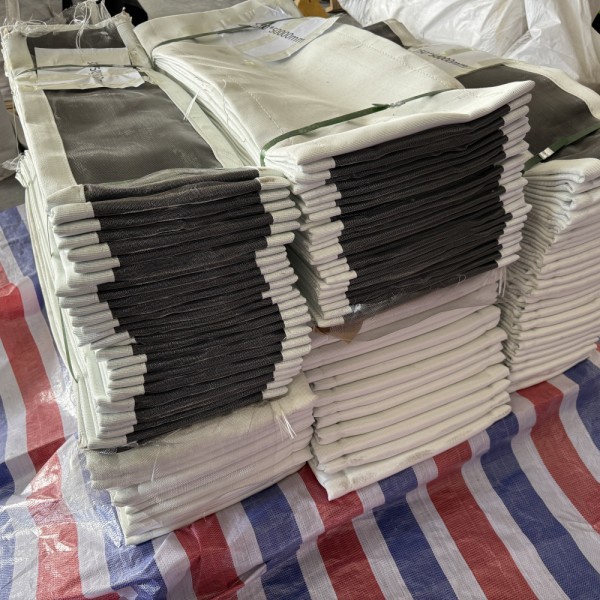
A dilatação térmica é a razão mais conhecida para a instalação de uma junta de dilatação, mas não é a única.
A necessidade de movimentação completa pode resultar de diversas condições de operação.
| Causa | O que acontece no sistema? | Função da junta de expansão |
|---|---|---|
| Expansão Térmica | Os dutos metálicos se expandem com o aumento da temperatura. | Permite movimento dimensional controlado |
| Contração térmica | A tubulação de ar se contrai durante o desligamento ou resfriamento. | Allows the system to return toward its cold position |
| Fan Vibration | Mechanical vibration is transferred from rotating equipment | Provides a flexible connection between equipment and ducting |
| Misalignment | Connecting duct faces may not be perfectly aligned | Can accommodate specified offsets within the joint design |
| Structural Movement | Supports or equipment may move relative to each other | Provides a controlled flexible section |
| Operating Cycles | Repeated heating and cooling creates cyclic movement | Accommodates repeated dimensional changes when correctly designed |
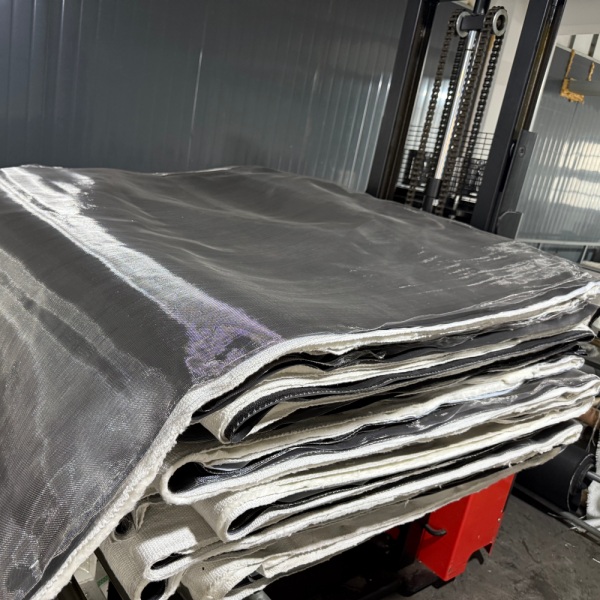
A fabric expansion joint should not be viewed simply as a piece of cloth connecting two ducts.
The flexible section is an engineered material system. Depending on service conditions, it may use a single flexible layer or several different layers, each selected for a specific function.
The outer layer forms part of the flexible envelope and may also provide resistance to weathering, environmental exposure or external mechanical conditions.
This layer helps contain the process gas. Its material must be compatible with the expected temperature, gas composition, moisture and chemical exposure.
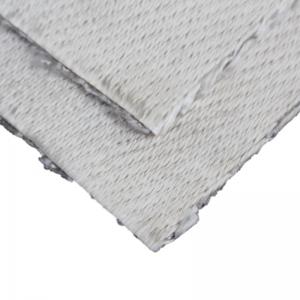
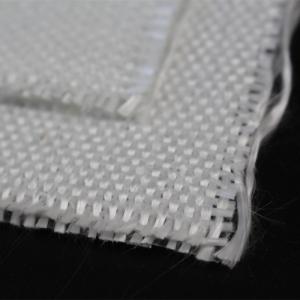
Reinforcement provides mechanical support and dimensional stability to the flexible element. Fiberglass and other technical textile constructions are commonly considered depending on temperature and mechanical requirements.
High gas temperature does not necessarily mean every layer of an expansion joint should be exposed directly to that temperature.
An insulation package can reduce heat transfer from the process side toward temperature-sensitive sealing or outer layers.
Hot gas velocity, ash, dust or abrasive particles can damage an unprotected flexible surface. Some systems therefore require an internal liner, baffle or other protection to shield the joint from direct gas flow and particulate impact.
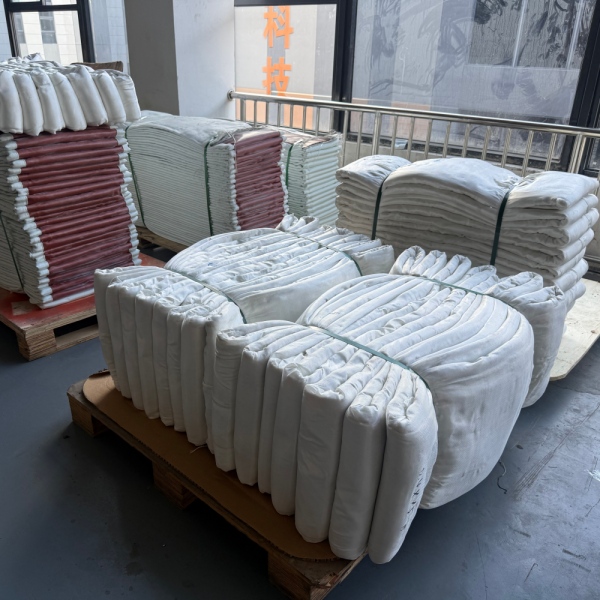
One material rarely provides every property required by a severe industrial application.
For example, a material with excellent temperature resistance may not provide the best gas sealing. A highly flexible sealing material may require reinforcement. A chemically resistant membrane may need insulation to keep its operating temperature within an acceptable range.
As a result, manyfabric expansion jointsuse a combination of materials rather than one fabric performing every function.
Typical material families include:
BSTFLEX also manufactures a broad range ofhigh temperature fabrics, allowing material construction to be evaluated according to thermal, chemical and mechanical requirements.
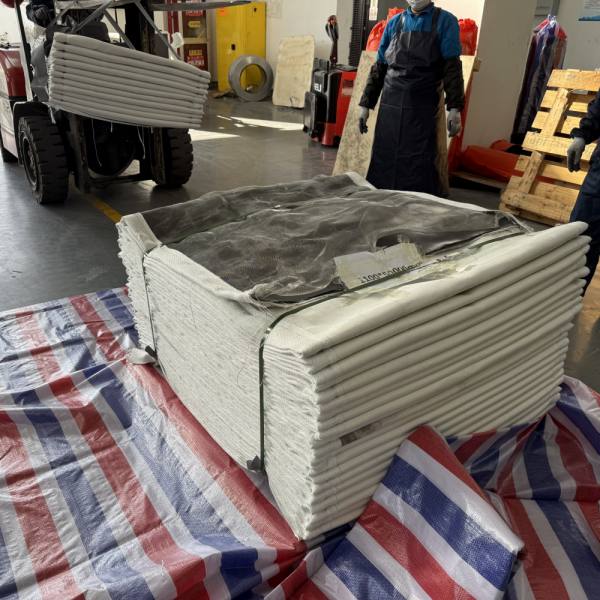
Fabric joints are mainly associated with industrial gas-handling and ducting systems rather than conventional high-pressure liquid piping.
Typical applications include the following.
Boilers, furnaces and combustion equipment can generate hot flue gases that must travel through large duct networks. These ducts experience significant dimensional change between ambient and operating temperatures.
Exhaust ducts connected to engines, industrial furnaces, thermal processing equipment or pollution-control systems may require movement compensation between hot equipment and downstream ducting.
Power plants use large gas-handling systems around boilers, fans, air-handling equipment and emission-control installations. Thermal growth and vibration can occur at multiple connection points.
Cement production combines heat, large duct dimensions, dust and continuous process operation. Flexible expansion sections may be required around kiln-related systems, fans and process ducts.
High-temperature furnaces, hot-air systems and exhaust ducts in steel and metal-processing plants can generate significant thermal movement.
Placing a flexible connection between rotating equipment and rigid ducting can help prevent all equipment movement from being transmitted directly into the surrounding duct structure.
Large ducting systems used with filtration, scrubber, flue-gas treatment and other air-pollution-control equipment often need flexible connections between process components.
Both products are intended to manage movement, but they should not be considered interchangeable simply because they share the term “expansion joint.”
| Characteristic | Fabric Expansion Joint | Metallic Bellows |
|---|---|---|
| Flexible Element | Fabric, coated textile or composite membrane | Formed metal bellows |
| Common Application | Large industrial ducts and gaseous-media systems | Industrial piping and engineered duct or process systems |
| Movement Method | Flexible belt changes geometry | Metal convolutions flex |
| Large Duct Sizes | Well suited to custom large cross-sections | Requires application-specific metallic design |
| Multidirectional Movement | Can accommodate several movement directions in one flexible section | Depends on bellows geometry and assembly design |
| Material System | Can combine several fabric, coating and insulation layers | Primarily determined by metallic alloy and bellows construction |
Pressure, temperature, process medium, movement, duct size and system design must all be considered before deciding which expansion joint technology is appropriate.
A flexible joint can help isolate vibration between connected components because its flexible element does not behave like a completely rigid metal duct section.
This is useful near fans, blowers and other equipment that produces mechanical vibration.
However, vibration should still be treated as an engineering input. Frequency, amplitude, equipment arrangement and joint geometry all influence performance. A fabric expansion joint should not be selected only because a system is described as “vibrating.”
There is no universal movement value that applies to every fabric expansion joint.
Movement capability depends on:
For this reason, axial, lateral and angular movements should be stated separately when specifying a custom expansion joint.
A request such as “50 mm total movement” is less useful than specifying how that movement occurs.
For example:
These values are examples of how movement information can be communicated, not standard ratings for every joint.
There is also no single temperature rating that defines all fabric expansion joints.
The allowable process temperature depends on the complete construction.
A high-temperature joint may be designed so that the process-side protection and insulation reduce the temperature reaching the gas-sealing membrane and external flexible layers.
Temperature selection should therefore consider:
This is why specifying only “high temperature fabric expansion joint” is insufficient for engineering selection.
A manufacturer needs more than the nominal duct dimensions to select a reliable construction.
The most useful project information includes:
| Design Information | Typical Details Required |
|---|---|
| Duct Geometry | Round, rectangular, square or special shape |
| Dimensions | Diameter or width and height |
| Face-to-Face Length | Available installation distance |
| Temperature | Normal and maximum process temperature |
| Pressure | Positive or negative operating and design pressure |
| Process Medium | Hot air, flue gas, exhaust gas or other process gas |
| Axial Movement | Compression and extension |
| Lateral Movement | Required transverse offset |
| Angular Movement | Required angular displacement |
| Chemical Conditions | Acidic, alkaline, moisture or other process exposure |
| Particulate Loading | Dust, ash or abrasive particles |
| Installation Environment | Indoor, outdoor, weather exposure or confined area |
Anon metallic expansion jointshould be considered when an industrial ducting system needs flexibility and the operating conditions are suitable for a fabric-based construction.
Typical reasons include:
The final decision should always be based on actual system conditions rather than the product name alone.
Some basic constructions can be standardized, but industrialfabric expansion jointsare frequently customized.
Two ducts with the same dimensions may require completely different expansion joints if they operate at different temperatures, carry different gases or experience different movements.
Important differences may include:
This is why drawings and operating data are particularly valuable when sourcing replacement or OEM fabric expansion joints.
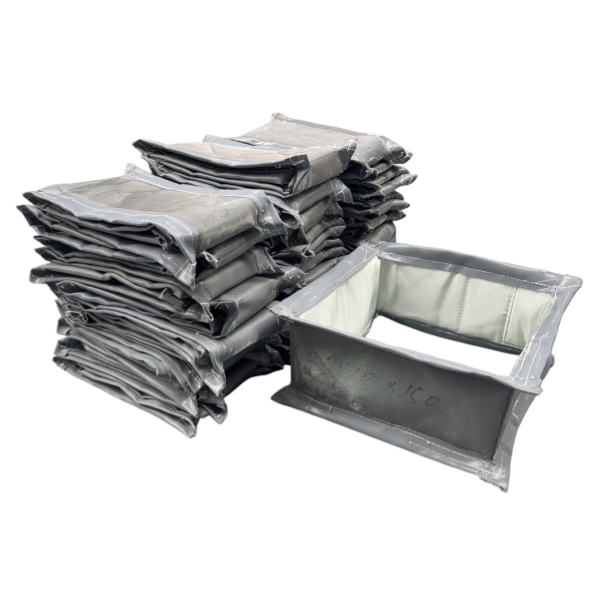
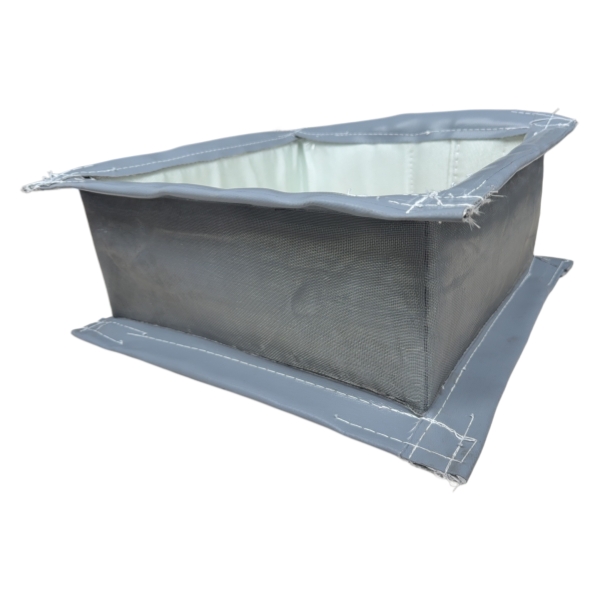
Rectangular joints are widely used on large industrial duct systems. Their corner sections require careful design because the flexible element does not deform identically along straight sides and corners.
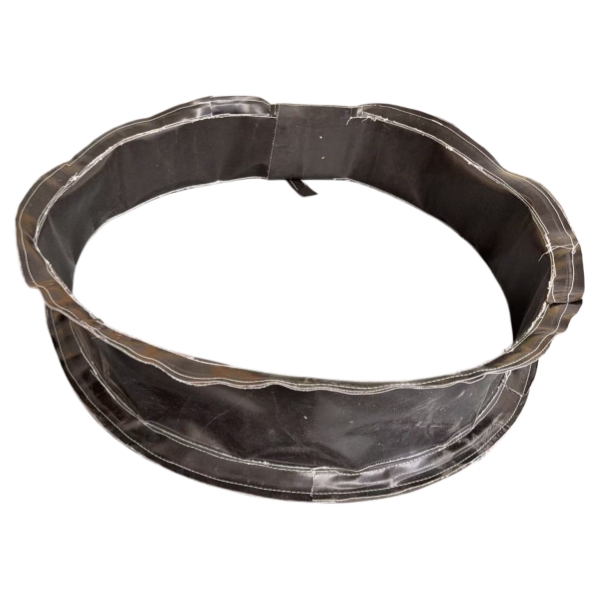
Round joints are used on circular ducting, fan connections and exhaust systems. The circumference provides a continuous attachment surface around the duct.
Square configurations are similar in principle to rectangular designs but may be required by specific duct or equipment layouts.
Transitions, non-standard dimensions and application-specific geometries can be manufactured when existing industrial equipment cannot accept a standard shape.
Expansion joint service life depends heavily on correct specification and installation.
Potential failure mechanisms include:
A damaged joint should therefore not automatically be replaced with an identical copy without understanding why the original unit failed.
For replacement projects, operating history can be as valuable as dimensional information.
In industrial ducting, the terms are often used for closely related products. A fabric expansion joint uses a flexible non-metallic fabric or composite element, so it falls within the broader non-metallic expansion joint category. The exact terminology varies by industry and construction.
It provides a flexible connection between sections of industrial ductwork so thermal expansion, contraction, lateral displacement, angular movement, vibration and specified misalignment can be accommodated without making the connection completely rigid.
Typical locations include industrial exhaust ducts, flue-gas systems, furnace and boiler ductwork, fan connections, cement plants, power-generation equipment, steel-processing facilities and air-pollution-control systems.
Yes. Depending on the design, they can accommodate axial compression, axial extension, lateral movement, angular movement and combinations of these movements.
No. Fiberglass is an important reinforcement and high-temperature textile, but complete expansion joints may combine coated fiberglass, PTFE-coated fabric, silicone-coated textiles, silica fabrics, insulation and other materials according to operating conditions.
Sim, quando todo o sistema de materiais é projetado para a temperatura e as condições reais do processo. Aplicações de alta temperatura frequentemente exigem múltiplas camadas funcionais e proteção adequada entre o fluxo de gás quente e o elemento de vedação flexível.
Não automaticamente. As juntas de dilatação de tecido e as metálicas apresentam características diferentes em termos de pressão, movimento, temperatura e mecânica. As condições do sistema devem ser avaliadas antes de se alterar a tecnologia das juntas de dilatação.
Informações úteis incluem a largura e a altura ou o diâmetro do duto, o comprimento entre as faces, as dimensões do flange, a disposição dos parafusos, o formato da junta e o espaço disponível para instalação. A temperatura de operação, a pressão, o fluido e os requisitos de movimentação também são essenciais.
BSTFLEX desenvolvejuntas de dilatação de tecidoPara aplicações industriais de dutos, exaustão, ar quente e gases de combustão. A construção pode ser adaptada a geometrias de dutos circulares, retangulares, quadradas e não padronizadas, com sistemas de materiais selecionados de acordo com a temperatura, pressão, fluidos do processo, movimentação e condições de instalação.
Se você estiver desenvolvendo um novo sistema ou substituindo uma junta existente, revise oJunta de Expansão de Tecido Não Metálico BSTFLEXPágina do produto com opções de construção e personalização disponíveis.
Para avaliação de engenharia, envie as dimensões do duto, temperatura normal e máxima, pressão de operação, fluido do processo, deslocamento axial, deslocamento lateral, comprimento de instalação, quantidade e desenhos disponíveis.
Solicite um orçamento personalizado para juntas de dilatação em tecido.

 English
 français
 Deutsch
 русский
 italiano
 español
 Nederlands
 العربية
 日本語
日本語 한국의
한국의 Türkçe
 Polski
 Tiếng Việt
 slovenský
 Indonesia