English
 français
 Deutsch
 русский
 italiano
 español
 Nederlands
 العربية
 日本語
日本語 한국의
한국의 Türkçe
 Polski
 Tiếng Việt
 slovenský
 Indonesia




Carbon Fiber Braided Sleeve Sizing and Installation Guide
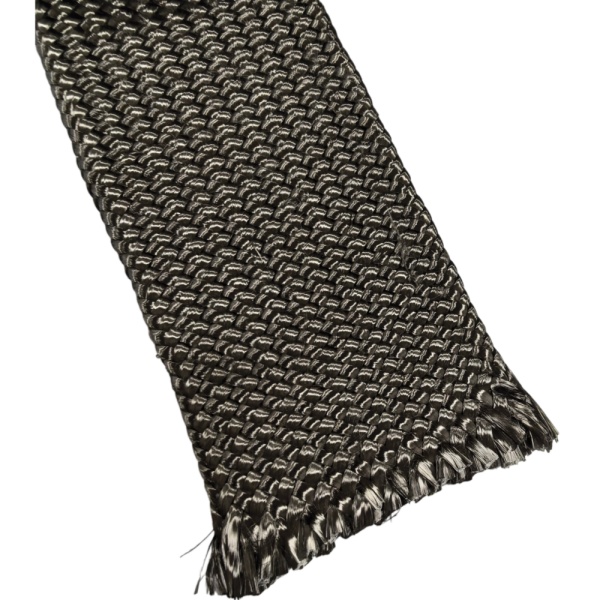
A braided sleeve does not have one fixed diameter. Push the ends toward each other and the tube opens; pull them apart and it becomes narrower. The length changes at the same time. That is why a sleeve that slips easily over the widest part of a mandrel may cover less of the part than its cut length suggests.
Start with the part drawing, then compare it with the diameter range of the specific braid. BSTFLEX lists 3K, 6K, 12K and 24K options on its Carbon Fiber Braided Sleeves product page. The ranges there are a starting point for a fit trial, not a promise that every sleeve will have the same coverage, angle or expansion behavior.
Measure the path the sleeve must cover
For a straight tube, record the outside diameter and the length to be reinforced. For a taper, record the smallest and largest outside diameters and where the change occurs. Add the dimensions of any local features the sleeve must pass over during installation: collars, bonded inserts, shoulders or fittings. A sleeve might fit the working section yet snag on a larger feature before it reaches its final position.
Also state whether the braid will be installed over a bare mandrel, a foam core, an existing composite ply or a partly built laminate. These surfaces can have different outside diameters. When several braid layers are planned, check the installed diameter for each successive layer rather than ordering every layer from the first mandrel dimension.
Use the catalogue range to shortlist models
Match both the narrowest and widest installed diameters against the published range for a candidate model. A part close to either limit deserves a physical trial: the sleeve can stretch to fit but may open visibly or require a different cut length. The final choice also depends on the required yarn coverage, fiber orientation and laminate design.
| Published model example | Nominal diameter range | Nominal linear mass |
|---|---|---|
| 3K20 | 20–40 mm | 20 g/m |
| 6K39 | 30–50 mm | 39 g/m |
| 12K77 | 40–70 mm | 77 g/m |
| 24K235 | 64–127 mm | 235 g/m |
These four examples are drawn from the published BSTFLEX table, which contains additional models. Confirm current values, tolerances and availability before using any entry in a production specification.
The '3K', '6K' and '12K' labels describe carbon tow filament counts. They do not, by themselves, specify an installed diameter or finished strength. Use the complete model entry, including spindle count and nominal linear mass, when comparing options.
Check the length after fitting
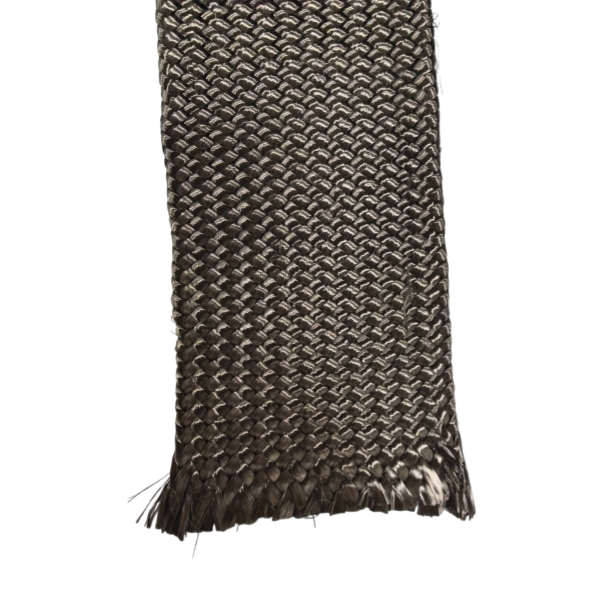
Do not cut all production pieces from the finished component length alone. Slide a trial length onto the actual mandrel, settle the braid without pulling it unevenly, and mark the positions where reinforcement must start and stop. Measure the sleeve used between those marks. This trial captures the length change caused by the actual diameter and geometry.
For a tapered part, inspect coverage at both ends and along the transition. Large local changes in diameter can alter braid angle and the space between yarns. If coverage is too open on one section, test a different nominal range or a different construction instead of assuming that additional tension will solve it. Save the approved fitting method and measured cut length for repeat orders.
Installation notes for a first sample
- Prepare the mandrel or core according to the chosen composite process and confirm that sharp edges will not catch the dry fibers.
- Open the sleeve gradually and feed it over the part without dragging loose yarns against fittings.
- Move the braid to its final location, then distribute any excess length and check fiber coverage before impregnation.
- Mark the cut location only after the sleeve is fitted. Agree on the cutting method and handling allowance so the end does not unravel during the production process.
- Record the installed diameter, fitted length, visible angle and photographs of the approved sample.
Those steps are a fit check, not a substitute for the resin supplier's processing instructions or mechanical validation of the finished laminate.
What to include in a sizing inquiry
Send the minimum and maximum installed outside diameters, the finished coverage length, a drawing showing transitions and fittings, the number of plies, intended resin and process, target yarn size and annual quantity. If an existing sleeve is being replaced, include a short sample and photographs of it on the part. BSTFLEX can then compare the current model range with your installation method and advise which samples to trial.