pedido (moq):
1
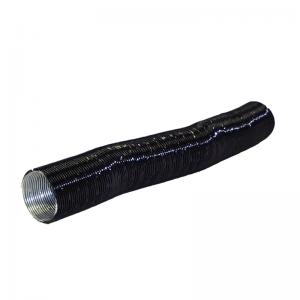
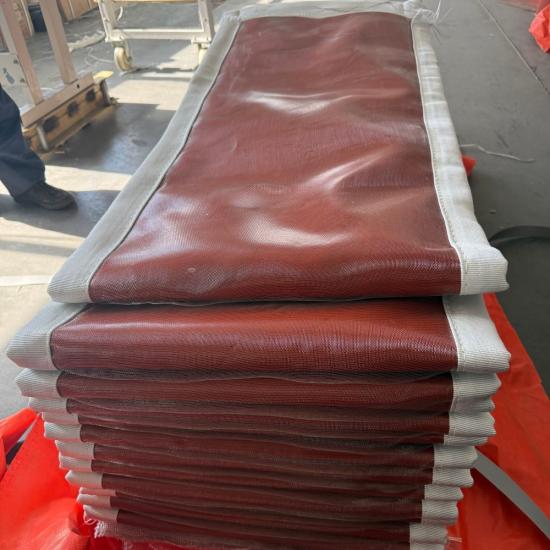
Junta de Expansão de Tecido Não Metálico BSTFLEXÉ um conector flexível projetado sob medida para sistemas industriais de dutos, ar quente, exaustão e gases de combustão, onde a expansão térmica, a vibração, a movimentação do equipamento ou o desalinhamento da instalação precisam ser acomodados sem transferir cargas excessivas para os dutos e equipamentos adjacentes.
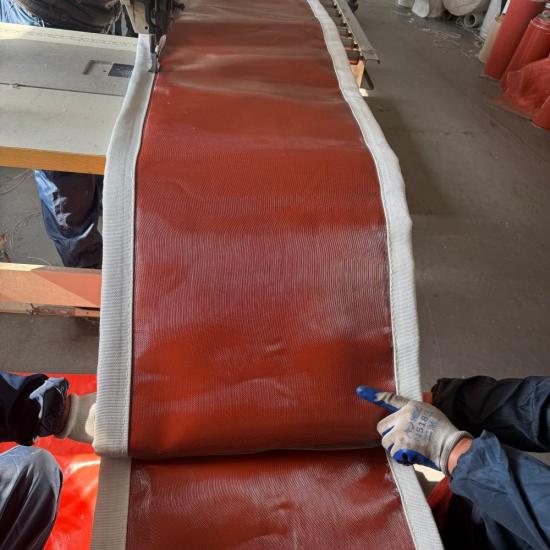
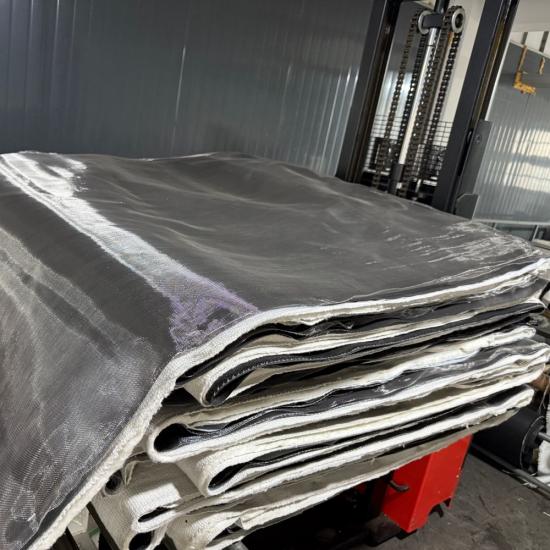
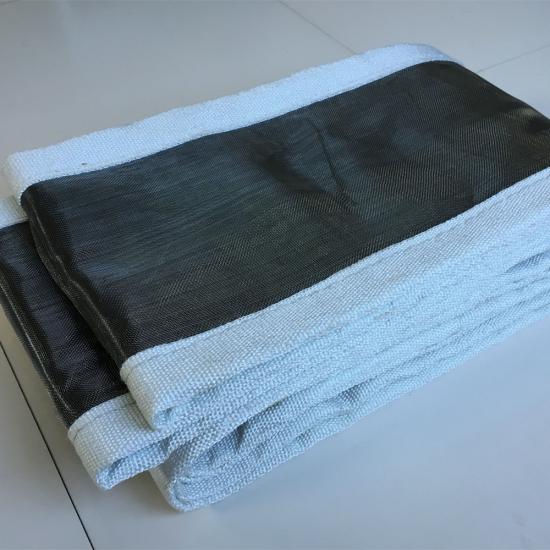
Ao contrário dos componentes metálicos rígidos, umjunta de expansão de tecidoUtiliza uma ou mais camadas flexíveis de tecido, revestimento, vedação e isolamento, selecionadas de acordo com a temperatura de operação, composição do gás, condições de pressão, requisitos de movimento e ambiente circundante. O elemento flexível pode acomodar deslocamentos axiais, laterais e angulares, mantendo uma conexão controlada entre duas seções de dutos.
A BSTFLEX fabrica peças redondas, retangulares, quadradas e para aplicações específicas.juntas de expansão não metálicasPara fabricantes de equipamentos OEM, instaladores de dutos, sistemas de geração de energia, fábricas de cimento, equipamentos para processamento de aço, fornos industriais, sistemas de ventilação e outras instalações de processos de alta temperatura.
| Produto | Junta de expansão de tecido não metálico |
| Nomes alternativos | Junta de Expansão de Tecido, Junta de Expansão de Duto de Tecido, Junta de Expansão de Tecido Composto, Compensador Não Metálico |
| Construção | Construção flexível de camada única ou multicamadas |
| Formas | Geometrias redondas, retangulares, quadradas e personalizadas. |
| Movimento | Movimento axial, lateral, angular e combinado |
| Mídia típica | Ar quente, gases de escape, gases de combustão e gases de processos industriais |
| Materiais | Selecionados de acordo com a temperatura, o meio, a exposição a produtos químicos, a abrasão e os requisitos mecânicos. |
| Tamanho | Fabricação personalizada de acordo com o desenho ou dimensões de instalação. |
| Aplicativo | Sistemas industriais de dutos, exaustão, fornos, caldeiras, ventiladores e ar comprimido para processos. |
UMjunta de expansão de tecido não metálicoÉ uma conexão flexível instalada entre seções de dutos ou equipamentos industriais para compensar movimentos que, de outra forma, criariam tensão no sistema. A dilatação térmica é uma das causas mais comuns de movimento, mas vibração, deslocamento do equipamento, tolerância de fabricação e movimentação estrutural também podem precisar ser controlados.
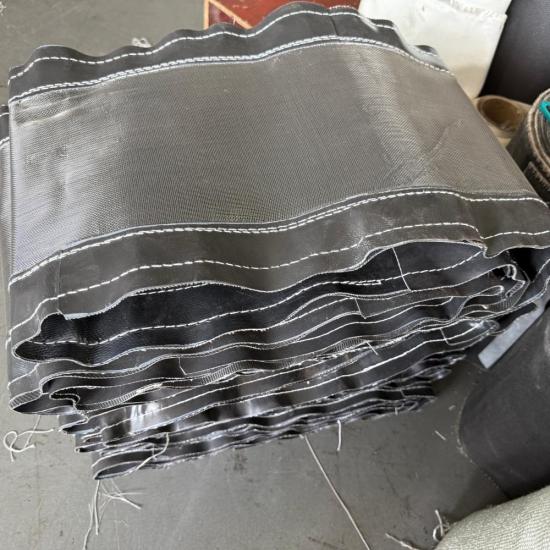
O corpo flexível é normalmente fabricado com camadas de tecido técnico e revestido, em vez de um fole metálico moldado. Dependendo das condições de serviço, a construção pode incorporar uma membrana de vedação a gás, tecido de reforço, isolamento térmico e uma camada protetora interna.
Essa construção faz umjunta de expansão de tecidoParticularmente adequado para grandes secções transversais de condutas, meios gasosos quentes e aplicações que requerem movimento em mais de uma direção.
Os sistemas de dutos industriais expandem e contraem conforme a temperatura de operação varia. Se esse movimento for completamente impedido, a tensão térmica pode ser transferida para as paredes dos dutos, flanges, ventiladores, conexões de equipamentos e estruturas de suporte.
Uma opção flexíveljunta de expansão de duto de tecidoCria uma zona de movimento controlado entre seções adjacentes. À medida que o duto se expande, contrai ou se desloca, a seção flexível altera sua geometria, em vez de forçar todo o deslocamento em componentes rígidos.
Dependendo da geometria da junta e do projeto do sistema, a junta de expansão pode acomodar:
Não existe uma única estrutura de tecido adequada para todas as juntas de dilatação industriais. Um projeto confiável começa com as condições reais de operação.
Um sistema multicamadas pode conter diversas camadas funcionais, cada uma desempenhando uma tarefa diferente:
A camada de vedação a gás ajuda a conter o fluido do processo e é selecionada de acordo com a temperatura, a composição do gás, a umidade, a exposição a produtos químicos e as condições de pressão. Dependendo da aplicação, podem ser considerados materiais à base de fibra de vidro revestida ou fluoropolímeros.
A camada de reforço proporciona estabilidade dimensional e suporte mecânico ao elemento flexível. Fibra de vidro tecida e outros têxteis técnicos podem ser selecionados de acordo com as propriedades mecânicas e térmicas necessárias.
Sistemas de alta temperatura podem exigir uma camada de isolamento para reduzir a temperatura que atinge os materiais de vedação externos. A espessura e o material do isolamento devem ser dimensionados de acordo com a temperatura do gás, os limites de temperatura externa e a geometria da junta.
Quando a junta de expansão estiver exposta a alta velocidade de gás, partículas ou meios abrasivos, um sistema de proteção interno ou revestimento de fluxo pode ser necessário para reduzir o impacto direto no elemento flexível.
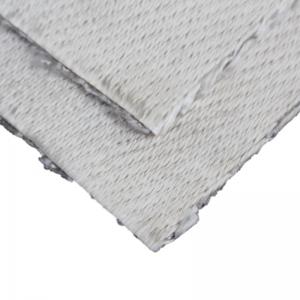
A seleção de materiais é uma das partes mais importantes deprojeto de junta de expansão não metálicaA BSTFLEX trabalha com uma ampla gama detecidos de alta temperaturae têxteis técnicos revestidos, permitindo que a construção flexível seja adaptada a diferentes ambientes industriais.
| Tipo de material | Função típica | Considerações sobre a seleção |
|---|---|---|
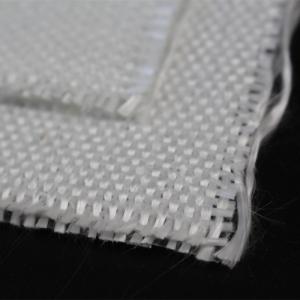
| Tecido de fibra de vidro | Reinforcement and thermal-resistant textile layer | Temperature, weight, weave and mechanical strength |
| Silicone Coated Fiberglass | Flexible outer or sealing layer | Temperature, weather resistance, flexibility and environment |
| PTFE Coated Fabric | Gas sealing and chemical-resistant layer | Chemical compatibility, temperature and process media |
| Silica Fabric | High-temperature thermal protection layer | Temperature exposure and insulation requirement |
| Insulation Materials | Reduction of temperature through the joint construction | Operating temperature and required external surface temperature |
| Metal Mesh or Internal Liner | Mechanical or flow protection where required | Gas velocity, abrasion, particles and installation geometry |
For particularly demanding thermal environments, BSTFLEX can evaluate high-silica textile solutions such as96% high temperature silica fabricas part of the overall thermal protection system where technically appropriate.
The final material combination should always be determined from actual application data rather than temperature alone.
Ahigh temperature fabric expansion jointis not defined by one universal maximum temperature. The permissible operating temperature depends on the complete joint construction, including the hot-face protection, insulation package, reinforcement fabric, gas seal membrane, external cover and the temperature distribution through those layers.
For this reason, BSTFLEX evaluates both process temperature and the temperature expected at individual layers of the expansion joint. This approach allows the materials to be selected for their actual operating environment rather than relying on a single generic temperature rating.
When requesting a high-temperature joint, provide the normal operating temperature, maximum or upset temperature, exposure duration and process medium wherever possible.
BSTFLEX manufactures expansion joints according to the shape and dimensions of the customer's ducting system.
Arectangular fabric expansion jointis commonly used on large industrial ductwork, boiler systems, air-handling equipment, furnace connections and flue-gas ducts. Corner geometry, movement distribution and attachment design require particular attention because stress is not distributed in the same way as on a circular joint.
Round and circular fabric expansion joints are suitable for cylindrical duct systems, fan connections, exhaust lines and process-air installations. Diameter, face-to-face length and movement requirements can be manufactured according to the installation.
Non-standard shapes, transitions and asymmetric configurations can be evaluated when standard round or rectangular joints cannot match existing equipment.
Different attachment arrangements can be supplied depending on the duct design and replacement requirements.
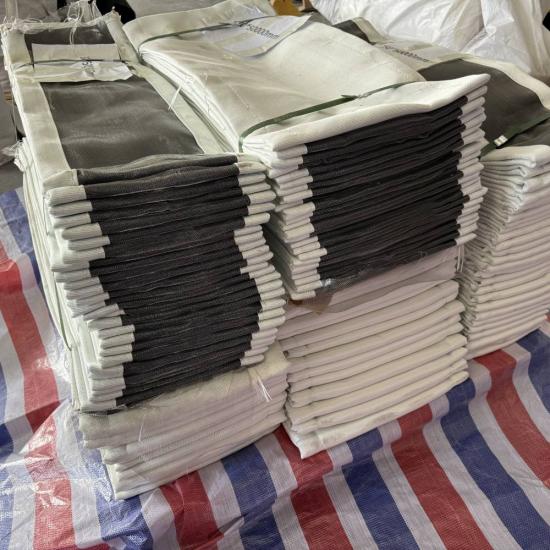
Belt-type fabric expansion jointsuse a flexible belt attached to mating metalwork and are suitable for many large industrial duct applications.
Flanged fabric expansion jointscan be manufactured as complete assemblies where the flexible element, insulation components and supporting metalwork are supplied as an integrated unit.
For replacement projects, BSTFLEX can manufacture according to customer drawings, dimensional records or available sample information.
BSTFLEXnon metallic fabric expansion jointscan be engineered for a broad range of hot-air and process-gas ducting systems.
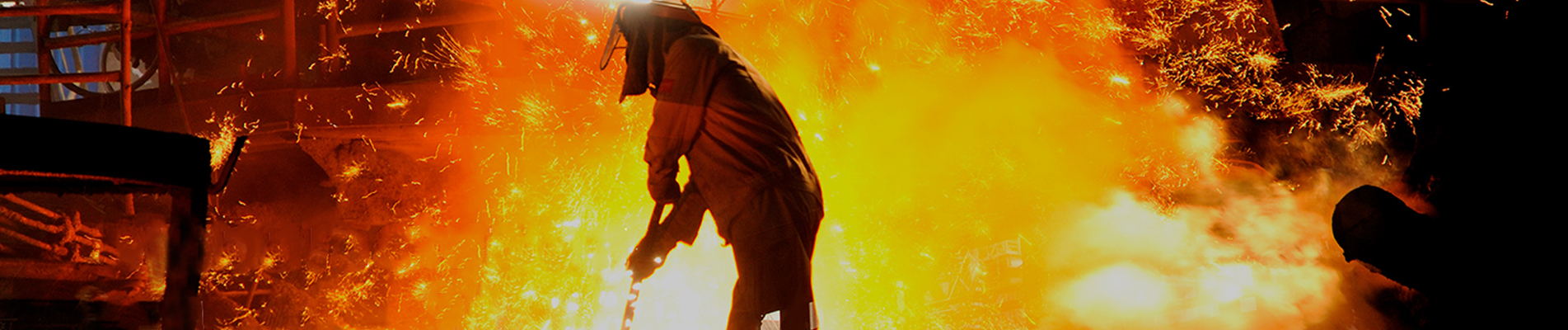
Fabric joints can be used in boiler ducting, flue-gas handling systems, fan connections and other large gas-transport ducts where thermal movement and vibration need to be isolated.
Cement production involves large ductwork exposed to heat, dust and continuous equipment movement. Expansion joints may be used around kiln-related ducting, process-air systems, fans and gas-handling equipment.
Furnace exhaust, hot-air ducts and process ventilation systems may require flexible connections capable of accommodating thermal growth while operating around demanding high-temperature equipment.
Where process gases contain corrosive constituents, joint materials should be selected according to chemical compatibility as well as temperature.
Fabric joints can compensate for expansion between heated equipment and downstream ductwork while helping isolate movement and vibration.
Flexible expansion joints can reduce the transmission of mechanical vibration between fans, blowers and rigid ducting.
High-temperature exhaust and hot-gas systems often require a flexible transition capable of accommodating repeated thermal cycles and installation movement.
| Design Factor | Fabric Expansion Joint | Metal Expansion Joint |
|---|---|---|
| Flexible Element | Technical fabric or composite textile construction | Formed metallic bellows |
| Typical System | Industrial ducting and gaseous-media systems | Pipe and process systems including higher-pressure service |
| Large Cross Sections | Well suited to large duct dimensions | Possible but design becomes more complex |
| Multidirectional Movement | Can accommodate axial, lateral and angular movement | Depends strongly on bellows configuration |
| Vibration Isolation | Good flexibility for fan and duct connections | Application dependent |
| Material Selection | Composite layers can be selected for thermal and chemical conditions | Determined mainly by metal alloy and bellows design |
The correct choice depends on pressure, temperature, process medium, duct geometry, required movement and applicable engineering standards. Fabric and metallic expansion joints should therefore not be treated as universally interchangeable products.
Selecting an expansion joint only by duct size or maximum temperature is not sufficient. Several operating parameters interact with each other and influence the appropriate construction.
The following information should be evaluated:
Providing this information allows the flexible element and supporting components to be selected around the real service conditions.
For faster engineering evaluation and quotation, send as much of the following information as available:
| Duct Size | Diameter or width × height |
| Joint Shape | Round, rectangular, square or custom |
| Installation Length | Face-to-face dimension |
| Operating Temperature | Normal continuous temperature |
| Maximum Temperature | Maximum or upset temperature and duration |
| Pressure | Normal and design pressure |
| Process Medium | Air, flue gas, exhaust gas or other process gas |
| Axial Movement | Compression and extension |
| Lateral Movement | Required offset movement |
| Angular Movement | Required angular displacement if applicable |
| Environment | Indoor, outdoor, chemical, dusty, wet or abrasive |
| Drawing | PDF, CAD drawing, dimensional sketch or existing joint details |
| Quantity | Prototype, replacement quantity or production requirement |
Industrial expansion joints are frequently project-specific components rather than standard catalogue parts. BSTFLEX supports customized manufacturing according to drawings, dimensional requirements and operating conditions.
Custom options may include:
Because BSTFLEX also works directly with thermal protection textiles and coated high-temperature fabrics, material construction can be evaluated as part of the expansion joint design instead of treating the flexible element as a generic component.
BSTFLEX focuses on engineered thermal protection and technical textile products for industrial applications. Our manufacturing capabilities cover high-temperature woven fabrics, coated fabrics, insulation materials and fabricated thermal components, providing a practical material base for customfabric expansion jointprojects.
A non metallic expansion joint is a flexible connection used primarily in ducting and gaseous-media systems to accommodate thermal expansion, vibration, misalignment and multidirectional movement. Its flexible element is normally manufactured from technical fabrics, coated textiles, insulation and other non-metallic materials selected according to the operating environment.
A fabric expansion joint uses a flexible textile or composite membrane, while a metallic expansion joint normally uses formed metal bellows. Fabric joints are widely used on large industrial ducts and gas-handling systems, while metallic bellows are common in piping and applications where system pressure or process requirements favor metallic construction.
Yes. Properly designed fabric expansion joints can accommodate axial, lateral and angular movement as well as combinations of these movements. The required movements must be provided during design so the joint geometry can be selected correctly.
There is no single temperature rating for every fabric expansion joint. Temperature capability depends on the flexible membrane, insulation package, hot-face protection, sealing material and overall joint construction. BSTFLEX selects the material system according to the normal operating temperature, maximum temperature and exposure conditions.
Depending on the application, materials may include fiberglass fabric, silicone-coated fiberglass, PTFE-coated fabric, silica fabric, insulation materials and metallic protective components. Each layer is selected according to its specific function.
Yes. Fabric expansion joints are widely applicable to industrial flue-gas and hot-gas ducting when the construction is engineered for the process temperature, chemical composition, moisture, pressure, gas velocity and movement requirements.
Yes. BSTFLEX manufactures rectangular, round, square and other custom configurations according to duct dimensions and installation requirements.
In many cases, yes. Dimensional measurements, photographs, operating conditions and information from the existing expansion joint can be used for an initial evaluation. A complete drawing or physical sample provides additional information when available.
The most useful information includes duct dimensions, joint shape, face-to-face length, operating and maximum temperature, pressure, process medium, axial movement, lateral movement, angular movement, gas velocity, chemical exposure, flange arrangement and required quantity. Drawings are strongly recommended where available.
Se você está buscando uma junta de expansão de reposição ou desenvolvendo um novo sistema de dutos industriais, envie seu desenho e as condições de operação para a BSTFLEX. Nossa equipe pode avaliar o formato, as dimensões, os materiais flexíveis, a construção do isolamento e os requisitos de movimentação necessários para sua aplicação.
Para obter um orçamento, forneça as seguintes informações:Dimensões dos dutos, temperatura, pressão, fluido de processo, requisitos de movimentação, comprimento de instalação, quantidade e desenhos disponíveis.
Solicite um orçamento para o seu projeto de juntas de dilatação em tecido.
Se você tiver dúvidas ou sugestões, deixe uma mensagem, nós responderemos o mais breve possível!

 English
 français
 Deutsch
 русский
 italiano
 español
 Nederlands
 العربية
 日本語
日本語 한국의
한국의 Türkçe
 Polski
 Tiếng Việt
 slovenský
 Indonesia